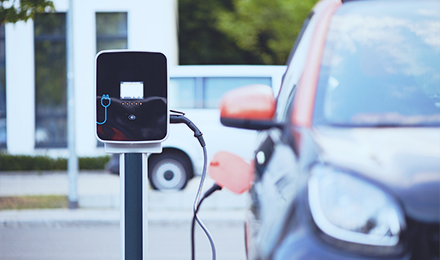
The electric vehicle (EV) industry is entering a new phase in which vehicles are no longer simply consumers of electricity. With bidirectional charging, an EV can store energy and send it back to a home, building, electrical load, or the grid.
Among these emerging applications, vehicle-to-grid (V2G) technology has attracted significant attention. V2G enables electric vehicles to exchange energy with the electrical grid, potentially supporting grid stability, renewable energy integration, peak-load management, and other energy services.
However, developing and validating V2G technology presents new challenges for EV manufacturers, battery developers, and charging-system engineers.
Before connecting an EV to a real grid, engineers need to test how batteries, battery management systems (BMS), onboard chargers, power electronics, and control software behave under different operating conditions.
A bidirectional battery simulator provides a controlled way to perform this testing—without requiring a fully assembled EV battery or access to a live electrical grid. What Is V2G Testing?
Vehicle-to-grid testing evaluates whether an electric vehicle and its charging system can safely and reliably exchange energy with the electrical grid.
Unlike conventional EV charging, where energy flows in one direction from the grid to the battery, V2G requires bidirectional power flow.
During charging, electricity flows into the simulated or actual EV battery. During discharging, energy flows in the opposite direction.
This creates additional requirements for:
- Battery management systems
- Bidirectional onboard chargers
- DC-DC converters and power electronics
- Charging communication protocols
- Energy-management systems
- Grid-interconnection controls
- Thermal-management systems
- Vehicle control software
Testing these systems under realistic conditions is essential before V2G technology can be deployed at scale.
How Does a Bidirectional Battery Simulator Work?
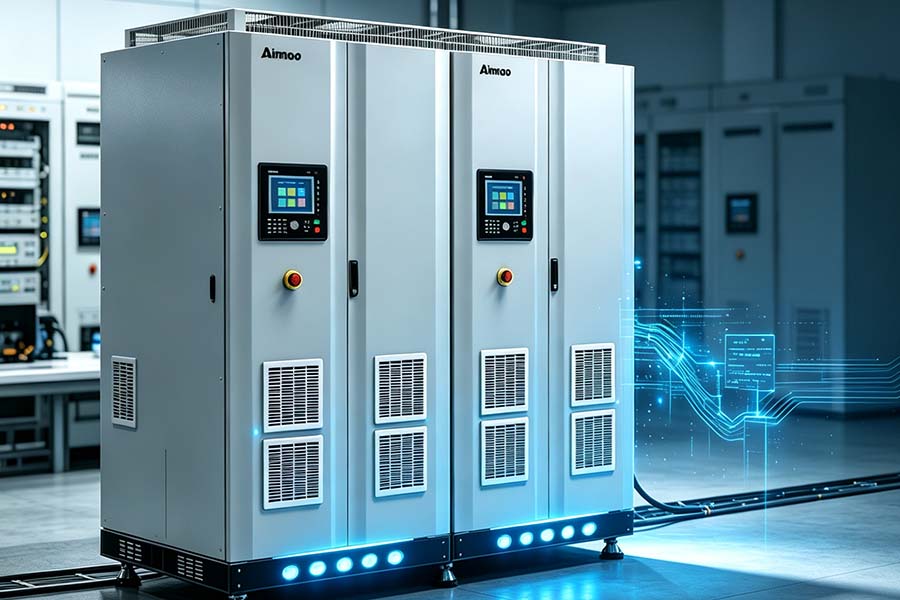
A bidirectional battery simulator emulates an EV battery's electrical characteristics while allowing power to flow both into and out of the simulator.
Instead of using a physical battery pack for every test, engineers can reproduce specific battery conditions electronically.
Depending on the test system, engineers can control parameters such as:
- Battery voltage
- Current
- State of charge (SoC)
- Charge and discharge power
- Dynamic load profiles
- Battery operating conditions
- Transient behavior
This creates a repeatable test environment for evaluating EV charging systems, power converters, BMS functions, and V2G control strategies.
Testing V2G Without a Real Electrical Grid
One key benefit of EV battery simulation is the ability to test bidirectional charging systems in a controlled laboratory environment.
For example, an engineer can connect a bidirectional charger to a battery simulator and reproduce the electrical behavior of an EV battery.
The test system can then evaluate multiple operating scenarios.
Charging and Discharging
Engineers can verify that the charging system correctly manages power flowing into and out of the simulated battery.
Bidirectional Power Transitions
V2G systems may need to switch between charging and discharging according to grid demand or energy-management commands. Simulation allows engineers to test these transitions repeatedly.
Different Battery States of Charge
A battery simulator can reproduce different SoC conditions without waiting for a physical battery to charge or discharge to the required level.
Dynamic Power Profiles
Engineers can reproduce changing power demands and evaluate how the charging system and control software respond.
Fault and Abnormal Conditions
Controlled test environments can also be used to evaluate system responses to abnormal voltage, current, power, or communication conditions.
Together, these capabilities make bidirectional battery simulation an important tool for V2G development.
Why V2G Simulation Matters for EV Manufacturers
For EV manufacturers, testing can become a significant part of the development cycle.
Physical battery packs are expensive, require extensive safety measures, and take time to charge and discharge. Repeated testing can also contribute to battery degradation.
A battery simulator can provide a faster and more flexible alternative for many stages of development.
Engineers can change operating conditions electronically and automate sequences of charge and discharge tests. This makes it easier to identify problems early, before moving to expensive vehicle-level or battery-pack testing.
As a result, EV battery simulators can help accelerate development while reducing reliance on physical prototypes during early testing.
Bidirectional Battery Simulation and BMS Testing
The battery management system is critical to safe EV operation. In a V2G application, the BMS must manage battery behavior not only during charging but also when energy is delivered back through the charging system.
A bidirectional battery simulator can reproduce different electrical conditions that allow developers to evaluate BMS responses.
This can be particularly valuable for:
- SoC management
- Voltage and current limits
- Charge/discharge control
- Protection functions
- Communication between the BMS and other vehicle systems
- Energy-management algorithms
Testing these functions under controlled conditions can help identify software and control issues before they reach physical battery testing.
Reducing Battery Testing Time and Risk
Battery degradation is an important consideration as V2G becomes more widely adopted.
Frequent bidirectional charging and discharging could introduce additional battery cycling, making battery-life management an important engineering consideration.
Simulation can help developers evaluate different V2G strategies before applying them extensively to physical battery packs.
For example, engineers can compare different charging and discharging profiles and analyze how control systems respond to various operating scenarios.
Physical battery testing remains essential for validating real-world performance and degradation. However, battery simulation can help engineers screen and optimize control strategies earlier in the development process.
Beyond V2G: Testing the V2X Ecosystem
V2G is part of a broader category known as vehicle-to-everything (V2X).
Other applications include:
- V2H (Vehicle-to-Home): supplying electricity from an EV to a residential property.
- V2L (Vehicle-to-Load): powering external electrical equipment directly from an EV.
- V2B (Vehicle-to-Building): providing energy to commercial or industrial buildings.
- V2G (Vehicle-to-Grid): exchanging electricity between EVs and the grid.
Although these applications have different requirements, they all depend on reliable bidirectional energy management.
A flexible bidirectional battery test system can help developers validate these different operating scenarios using controlled and repeatable battery conditions.
Supporting Hardware-in-the-Loop Testing
V2G development increasingly involves a combination of hardware and software testing.
Hardware-in-the-loop (HIL) testing allows engineers to evaluate real hardware components against simulated operating environments.
A bidirectional battery simulator can become part of this environment by providing the electrical behavior of a battery while other vehicle components operate as physical hardware.
This approach can help bridge the gap between software development and physical vehicle testing.
Developers can progressively move from simulation to HIL testing, laboratory validation, battery-pack testing, and ultimately complete vehicle testing.
The Future of EV Testing Is Bidirectional
As EVs become integrated with homes, buildings, renewable-energy systems, and electrical grids, traditional one-directional battery testing will no longer be sufficient for many applications.
Bidirectional battery simulation provides EV developers with a practical way to reproduce battery behavior and validate energy-flow scenarios before connecting systems to real batteries or real grids.
For automakers, battery manufacturers, charging-infrastructure developers, and EV technology companies, this can mean faster development cycles, more repeatable testing, and greater confidence in bidirectional charging technologies.
V2G has the potential to transform EVs from passive energy consumers into active components of the energy ecosystem. But realizing that potential requires rigorous testing at every stage of development.
With bidirectional battery simulators, engineers can test V2G systems in a controlled environment today—before putting them on the road or connecting them to the grid.
Frequently Asked Questions
What is a bidirectional battery simulator?
A bidirectional battery simulator is a programmable power system that emulates the electrical behavior of a battery while supporting both charging and discharging power flow.
Why is a battery simulator useful for V2G testing?
It allows engineers to reproduce battery conditions and bidirectional power-flow scenarios in a controlled, repeatable environment without relying exclusively on a physical EV battery or live electrical grid.
What can be tested with a bidirectional battery simulator?
Applications can include V2G charging systems, onboard chargers, BMS functions, power electronics, energy-management systems, control algorithms, and hardware-in-the-loop test setups.
Can a battery simulator replace physical battery testing?
No. Simulation complements physical battery testing. It can accelerate development and help identify issues earlier, while physical testing remains necessary for validating real battery behavior, performance, safety, and degradation.
What is the difference between V2G and V2X?
V2G specifically refers to energy exchange between an electric vehicle and the electrical grid. V2X is a broader term covering applications such as vehicle-to-home, vehicle-to-building, vehicle-to-load, and vehicle-to-grid.



 TEL:+86 532 83995188
 PHONE:+86 177 5322 5039
 E-MAIL:ainuo@ainuo.com
 ADDRESS:No. 134 Zhuzhou Rd, Laoshan District, Qingdao, China