As renewable energy systems continue to scale globally, the complexity of integrating them into modern power grids has increased dramatically. Solar photovoltaic (PV) systems, wind turbines, energy storage solutions, and electric vehicle (EV) infrastructure all introduce dynamic, decentralized, and often unpredictable behaviors into what was once a relatively stable and centralized grid. To ensure these systems operate reliably and comply with grid standards, engineers require highly accurate, flexible, and responsive testing environments.
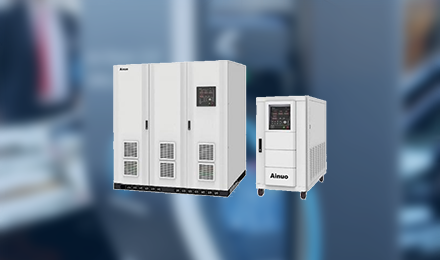
This is where the ANBGS(F) Bidirectional Grid Simulator AC Power Supply plays a critical role. Designed to replicate real-world grid conditions with high precision, the ANBGS(F) enables engineers to simulate a range of scenarios, from normal operating conditions to extreme grid disturbances. In doing so, it bridges the gap between laboratory testing and real-world deployment.
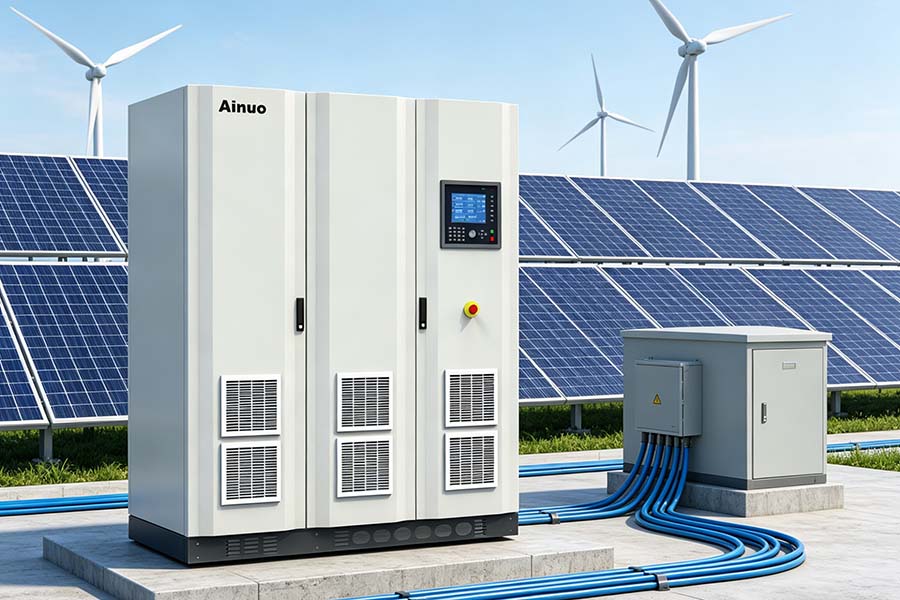
In this article, we'll explore how the ANBGS(F) enables realistic grid simulation and why it has become an essential tool for the development, validation, and certification of renewable energy systems.
The Need for Realistic Grid Simulation
Renewable energy systems do not operate in isolation—they must interact seamlessly with the electrical grid. However, the grid itself is not a perfect, stable entity. It experiences fluctuations in voltage, frequency deviations, harmonics, and transient disturbances caused by load changes, faults, and switching events.
For renewable systems, these variations present several challenges:
- Grid compliance requirements demand that systems remain stable under abnormal conditions.
- Intermittency of renewables introduces unpredictable power flows.
- Bidirectional energy flow (e.g., from solar panels or batteries back to the grid) complicates control strategies.
- Grid codes and standards require rigorous testing before deployment.
Traditional testing methods often fall short because they cannot accurately reproduce these complex conditions. The ANBGS(F) addresses this limitation by providing a fully programmable, bidirectional simulation platform.
What Makes the ANBGS(F) Different?
At its core, the ANBGS(F) is not just a power supply—it is a full-featured grid emulator. Its ability to both source and sink power (bidirectional operation) allows it to simulate real grid behavior in a way that conventional AC sources cannot.
Key distinguishing features include:
- Four-quadrant operation (supporting both power delivery and absorption)
- Energy regeneration capability
- High-precision voltage and frequency control
- Programmable grid disturbances
- Fast dynamic response
These capabilities enable the ANBGS(F) to replicate real-world conditions with remarkable fidelity.
Simulating Grid Disturbances with Precision
One of the most critical aspects of grid simulation is the ability to recreate disturbances that renewable systems will encounter in the field. The ANBGS(F) excels in this area by allowing users to program a wide range of grid anomalies.
Voltage Variations
Voltage fluctuations are common in real grids due to load changes, transmission losses, and distributed generation. The ANBGS(F) can simulate:
- Voltage sags (dips)
- Voltage swells
- Gradual voltage ramps
This is essential for testing how solar inverters or wind converters respond to unstable grid conditions.
Frequency Deviations
Grid frequency is a key indicator of system balance. Deviations can occur due to mismatches between generation and load. The ANBGS(F) enables:
- Precise frequency programming
- Rapid frequency transitions
- Simulation of under-frequency and over-frequency events
These tests are crucial for validating frequency ride-through capabilities.
Harmonics and Power Quality Issues
Modern grids are increasingly affected by non-linear loads, which introduce harmonics and distortions. The ANBGS(F) can generate:
- Harmonic distortion
- Interharmonics
- Voltage flicker
This allows engineers to evaluate how renewable systems perform under poor power quality conditions.
Supporting Renewable Energy Applications
The ANBGS(F) is particularly valuable in testing and validating renewable energy technologies. Let's explore some of its key applications.
Solar Inverter Testing
Solar inverters must comply with strict grid codes that require them to remain connected and stable during disturbances. The ANBGS(F) enables:
- Low Voltage Ride-Through (LVRT) testing
- High Voltage Ride-Through (HVRT) testing
- Anti-islanding verification
- Dynamic response evaluation
By simulating real grid faults, engineers can ensure that inverters behave correctly under all conditions.
Wind Power Systems
Wind turbines operate in highly variable environments, and their interaction with the grid can be complex. The ANBGS(F) allows testing of:
- Grid synchronization behavior
- Response to voltage and frequency fluctuations
- Fault ride-through capabilities
This ensures that wind energy systems contribute to grid stability rather than disrupt it.
Energy Storage Systems (ESS)
Battery energy storage systems play a critical role in balancing renewable generation. The ANBGS(F)'s bidirectional capability is especially important here, as it allows:
- Simulation of charging and discharging cycles
- Testing of grid-support functions
- Evaluation of energy feedback into the grid
This is essential for validating advanced energy management strategies.
Electric Vehicle (EV) and V2G Testing
As EV adoption grows, so does the importance of vehicle-to-grid (V2G) technology. The ANBGS(F) enables:
- Simulation of grid conditions for EV chargers
- Testing of bidirectional power flow between vehicles and the grid
- Validation of V2G and V2H (vehicle-to-home) scenarios
This supports the development of smarter, more interactive energy ecosystems.
Energy Regeneration: Efficiency Meets Sustainability
One of the standout features of the ANBGS(F) is its energy regeneration capability. Unlike traditional power supplies that dissipate energy as heat, the ANBGS(F) can feed energy back into the grid.
This offers several advantages:
- Reduced energy consumption
- Lower operational costs
- Minimized heat generation
- Improved environmental sustainability
For high-power testing environments, these benefits translate into significant savings and a smaller carbon footprint.
High-Speed Dynamic Response
Renewable energy systems often operate in fast-changing environments. Sudden changes in irradiance (for solar) or wind speed (for turbines) can cause rapid fluctuations in power output.
The ANBGS(F) is designed with a high-speed control system that enables:
- Rapid response to load changes
- Accurate reproduction of transient events
- Real-time simulation of dynamic grid conditions
This ensures that test results closely mirror real-world performance.
Programmability and Automation
Modern testing environments demand flexibility and automation. The ANBGS(F) meets this need with advanced programmability features.
Engineers can:
- Create custom test sequences
- Automate repetitive testing procedures
- Integrate the system with external control software
- Conduct long-duration reliability tests
This not only improves efficiency but also ensures consistency and repeatability in testing.
Accelerating Certification and Compliance
Compliance with international grid standards is a critical step for any renewable energy product. The ANBGS(F) simplifies this process by enabling accurate simulation of required test conditions.
Standards often require verification of:
- Ride-through capabilities
- Power quality performance
- Grid synchronization behavior
- Fault response characteristics
By providing a controlled and repeatable testing environment, the ANBGS(F) helps manufacturers:
- Reduce testing time
- Minimize development costs
- Achieve faster time-to-market
Bridging the Gap Between Lab and Real World
One of the biggest challenges in renewable energy development is ensuring that laboratory test results translate into real-world performance. The ANBGS(F) addresses this by offering:
- Highly realistic grid simulation
- Comprehensive disturbance modeling
- Accurate power flow control
This reduces the risk of unexpected behavior during field deployment and increases confidence in system reliability.
Future-Proofing Renewable Energy Systems
As power grids evolve, they are becoming more decentralized, digitalized, and dynamic. Technologies such as smart grids, microgrids, and distributed energy resources (DERs) are reshaping the energy landscape.
The ANBGS(F) is well-positioned to support these developments by enabling:
- Simulation of complex grid interactions
- Testing of advanced control algorithms
- Validation of next-generation energy technologies
This makes it a valuable tool not just for current applications, but for future innovations as well.
Conclusion
The transition to renewable energy is one of the most significant technological shifts of our time. Ensuring that renewable systems integrate seamlessly with the grid requires sophisticated testing tools that can replicate real-world conditions with high accuracy.
The ANBGS(F) Bidirectional Grid Simulator AC Power Supply stands out as a powerful solution for this challenge. With its ability to simulate grid disturbances, support bidirectional power flow, regenerate energy, and provide high-speed dynamic response, it enables engineers to thoroughly test and validate renewable energy systems.
From solar inverters and wind turbines to energy storage systems and EV infrastructure, the ANBGS(F) plays a crucial role in ensuring performance, reliability, and compliance. By bridging the gap between laboratory testing and real-world operation, it accelerates innovation and supports the global transition toward a cleaner, more resilient energy future.



 TEL:+86 532 83995188
 PHONE:+86 177 5322 5039
 E-MAIL:ainuo@ainuo.com
 ADDRESS:No. 134 Zhuzhou Rd, Laoshan District, Qingdao, China