Electric vehicles (EVs) are reshaping the future of transportation. At the heart of every EV is the battery — a complex electrochemical system that must deliver high energy, long life, and safe operation across varied conditions. For automotive R&D teams, validating battery systems and the numerous components dependent on them (e.g., battery management systems, inverters, onboard charging, power electronics) is both critical and challenging. Traditional testing using real battery packs is expensive, time-consuming, and potentially hazardous. That’s where EV battery simulators become indispensable.
A battery simulator mimics the electrical characteristics of a real battery pack in a controlled, programmable, repeatable way. This enables engineers to test devices and systems without relying on physical cells, thereby increasing safety while drastically reducing development cycles.
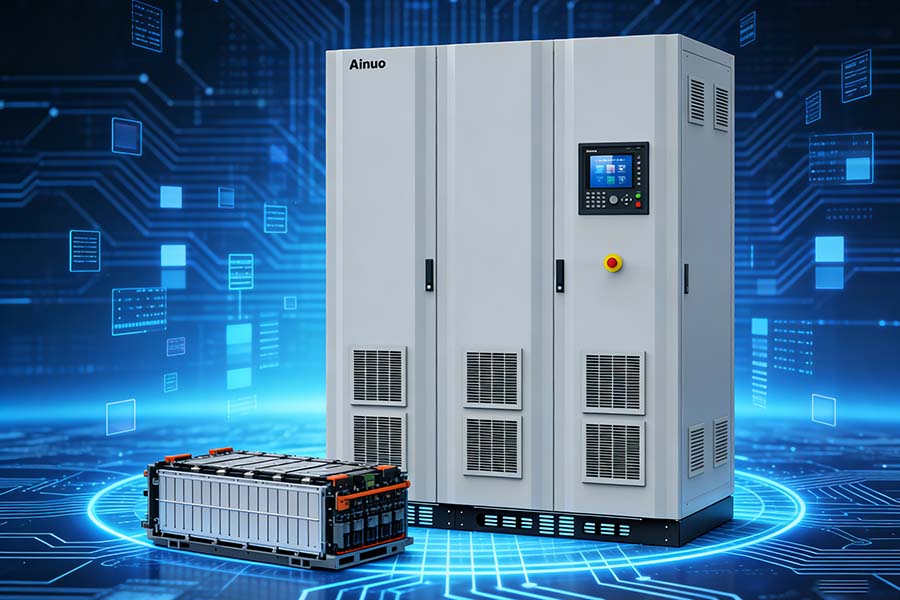
However, not all EV battery simulators are created equal. Selecting the right simulator requires understanding the features that matter most for automotive R&D. This article unpacks these key capabilities and explains why they are essential.
1. Wide Voltage and Current Range
EV battery packs operate at high DC voltages — typically from 200 V to 800 V and beyond in modern platforms. A capable EV battery simulator must cover this entire range, with configurable steps that allow precise emulation of nominal system voltages.
Similarly, current capacity matters. Automotive power electronics often undergo tests at high charge/discharge currents — sometimes several hundred amps. The simulator must deliver and absorb high current safely and efficiently, without degradation or drift.
Why this matters:
Without adequate voltage and current range, you cannot realistically emulate the conditions encountered by inverters, DC-DC converters, chargers, or traction motors. A limited range restricts test coverage and defeats the purpose of simulation.
2. Programmable Internal Resistance and Dynamic Impedance
A real battery’s voltage is a function of state of charge (SoC), current, temperature, and internal resistance. Internal resistance is not a static value — it changes dynamically under load and as the pack ages.
Advanced EV battery simulators allow engineers to program internal resistance and impedance profiles to mimic real battery behavior. This includes the ability to simulate:
- SoC-dependent voltage curves
- Ohmic and dynamic resistance changes
- Temperature affects indirectly through the electrical response
- Pack aging and degradation profiles
Why this matters:
This feature enables realistic stimulation of battery management systems (BMS) and powertrain controllers under near-real conditions. Testing can uncover issues that would only emerge under real battery behavior.
3. Bidirectional Operation (Source and Sink)
Modern EV battery systems are not just loads — they are active energy sources. For example, regenerative braking returns current to the battery, and grid services (like vehicle-to-grid, V2G) require the ability to both source and absorb power.
A true EV battery simulator must support bidirectional power flow — meaning it can:
- Source current (simulate discharge)
- Sink current (simulate charging and regenerative flows)
This capability is especially important for validating:
- Fast-charging strategies
- Regenerative braking performance
- Vehicle-to-grid and vehicle-to-load use cases
Why this matters:
Unidirectional test setups cannot emulate scenarios where energy flows back into the battery — a frequent occurrence in real EV operation. Without bidirectional capability, test coverage remains incomplete, especially for cutting-edge features.
4. High Transient Response and Low Output Impedance
EV power electronics are fast. During acceleration, braking, and rapid load switching, battery voltage can fluctuate quickly — sometimes within microseconds.
A high-performance EV battery simulator must deliver:
- Fast transient response — to mimic quick changes in load or charge
- Low output impedance — to prevent artificial voltage sag or distortion
This ensures the simulator closely tracks real battery behavior during rapid load shifts.
Why this matters:
Slow or high-impedance simulators cannot supply or absorb current fast enough to mimic conditions seen during dynamic driving events. This can lead to mischaracterization of component performance and obscure faults.
5. Safety Features and Protections
Testing high-voltage systems is inherently risky. Automotive R&D teams must prioritize safety to protect personnel and equipment.
Top battery simulators include built-in protections such as:
- Overvoltage protection (OVP)
- Overcurrent protection (OCP)
- Overtemperature shutdown
- Short-circuit detection
- Fault logging
Some advanced units also support remote emergency stop, hardware interlocks, and audible alarms.
Why this matters:
Safety features reduce risk during early test cycles and help isolate faults quickly. In R&D environments with complex setups, these protections prevent costly damage.
6. Seamless Integration with Test Automation Frameworks
Automotive development rarely happens in isolation. Engineers often use automated test environments, including hardware-in-the-loop (HIL) systems, software-in-the-loop (SIL) setups, and automated regression test rigs.
A good simulator should integrate easily with these ecosystems, providing:
- Standard communication interfaces (CAN, Ethernet, USB, Modbus, LXI)
- API support for scripting languages (Python, LabVIEW, MATLAB/Simulink)
- Synchronization with external control systems
Why this matters:
Automation accelerates repetitive testing and enables continuous integration of design changes. Without integration support, manual operation becomes a bottleneck.
7. Accurate State-of-Charge (SoC) and State-of-Health (SoH) Modeling
Battery behavior is not just voltage and current — it’s also about how the battery’s capacity and health evolve over time.
Advanced simulators offer:
- SoC profiling with configurable charge/discharge curves
- SoH degradation models to mimic aging effects
- Support for dynamic simulation of capacity fade
These features enable realistic long-term testing scenarios without relying on physical aging processes.
Why this matters:
Understanding how the BMS and related systems categorize and respond to SoC/SoH changes is essential for durability validation and warranty coverage decisions.
8. Expandability and Modular Architecture
As EV platforms evolve, so do test requirements. An ideal battery simulator should be:
- Modular, allowing parallel stacking for higher power
- Scalable, to simulate larger battery packs
- Flexible, to adapt to new voltage/current standards
Modular designs also offer redundancy and easier maintenance.
Why this matters:
Future-proofing your test infrastructure avoids repeated capital expenditure when new EV architectures are introduced.
9. Regenerative Power Capabilities
Many modern simulators offer regenerative operation, meaning they can feed energy back into the grid or test system instead of dissipating it as heat.
Benefits include:
- Lower operational cost
- Reduced cooling requirements
- Higher energy efficiency
Why this matters:
High-power test setups can generate significant heat and energy loss. Regenerative systems make testing more sustainable and economical.
10. Real-Time Monitoring and Data Logging
Testing without visibility is guesswork. A powerful simulator should provide:
- High-resolution data logging (voltage, current, power, SoC, etc.)
- Real-time dashboards and waveform views
- Exportable logs for analysis in external tools
Some simulators include analytics software to detect anomalies or trend behavior over long tests.
Why this matters:
Rich data enables faster debugging, deeper insights into system behavior, and stronger traceability for regulatory and quality documentation.
Final Thoughts
Selecting the right EV battery simulator is not simply about matching voltage and current specs. It’s about choosing a platform that supports realistic battery emulation, integrates with your development workflow, enhances safety, and accelerates time-to-market.
In automotive R&D, where precision matters and innovation moves fast, a simulator with programmable battery models, bidirectional power flow, advanced protections, and automation support becomes a strategic asset — not just a test instrument.
As EV architectures evolve toward higher power, bidirectional charging, and more stringent safety standards, investing in a capable battery simulator today can yield dividends throughout your vehicle development lifecycle.



 TEL:+86 532 83995188
 PHONE:+86 177 5322 5039
 E-MAIL:ainuo@ainuo.com
 ADDRESS:No. 134 Zhuzhou Rd, Laoshan District, Qingdao, China