As the solar industry continues to expand, manufacturers face increasing pressure to produce high-quality inverters faster and more cost-effectively. Consequently, automated PV inverter testing has emerged as a powerful solution, enabling manufacturers and testing laboratories to improve accuracy, increase throughput, and ensure compliance with international standards.
This article explores the fundamentals of automated PV inverter testing, the tools and equipment involved, and the significant benefits organizations can gain by implementing automation in their testing processes.
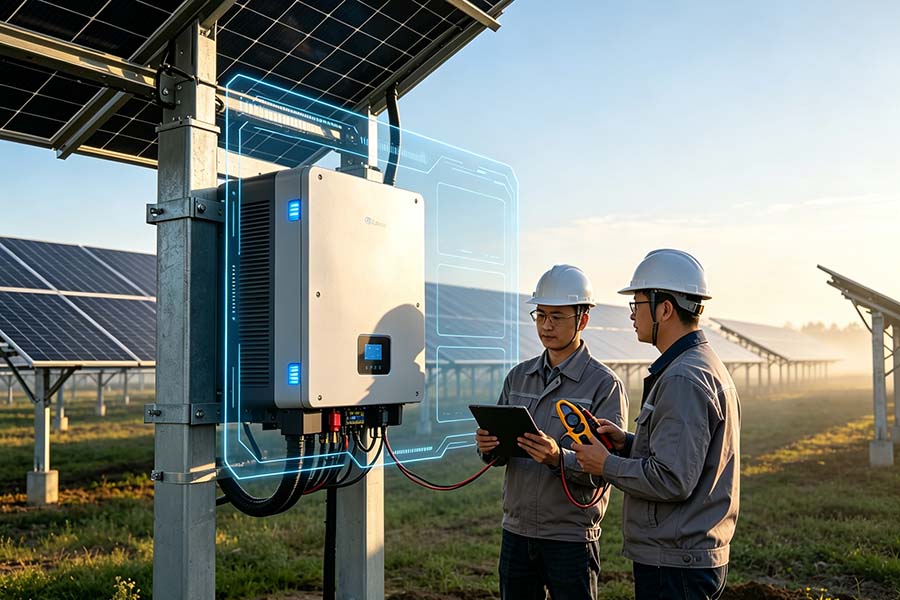
PV inverters operate under a wide range of environmental and electrical conditions. To ensure reliable performance, they must undergo comprehensive testing before deployment. Testing procedures typically evaluate various characteristics, including:
Testing also verifies that inverters meet regulatory standards and certification requirements established by organizations and regulatory bodies around the world.
Historically, many of these tests were performed manually, requiring technicians to configure equipment, record measurements, and analyze results individually. While effective on a small scale, manual testing becomes increasingly challenging as product complexity and production volumes increase.
Automation addresses these limitations by integrating hardware and software systems that perform testing procedures automatically with minimal human intervention.
Automated PV inverter testing refers to the use of programmable test equipment, software platforms, and data acquisition systems to execute predefined test sequences automatically. Instead of relying on technicians to manually adjust settings and collect measurements, automated systems control instruments, monitor inverter responses, record data, and generate reports.
An automated testing environment typically performs tasks such as:
By automating repetitive and complex procedures, organizations can achieve higher consistency and significantly improve testing efficiency.
Successful automation relies heavily on software tools that coordinate testing activities and manage data collection.
Test automation software acts as the central controller of the testing system. It communicates with instruments, executes test scripts, and coordinates the entire testing workflow.
Modern automation platforms often include:
These software solutions allow engineers to create repeatable test procedures and minimize manual intervention.
Data acquisition (DAQ) systems collect information from sensors and measurement instruments throughout the testing process. They capture critical parameters such as:
DAQ systems provide high-speed sampling and accurate measurements that enable detailed analysis of inverter performance.
As production scales, managing test data becomes increasingly complex. Test management platforms organize test procedures, track historical data, and maintain documentation for regulatory compliance.
These systems help manufacturers:
Automated testing generates enormous volumes of data. Analytical software transforms raw measurements into actionable insights by identifying trends, detecting anomalies, and producing comprehensive performance reports.
Advanced analytics capabilities may include:
These capabilities enable engineers to make informed decisions quickly and accurately.
While software orchestrates the testing process, specialized hardware equipment performs the actual electrical simulations and measurements.
PV array simulators replicate the electrical characteristics of solar panels under various environmental conditions. They can generate different irradiance levels and temperature profiles without requiring actual solar panels.
Key capabilities include:
PV simulators are fundamental components of automated inverter testing environments because they allow engineers to evaluate inverter behavior under controlled and repeatable conditions.
Programmable AC sources simulate utility grid conditions by generating configurable voltage and frequency profiles.
They can emulate:
These simulations are essential for verifying that inverters can respond appropriately to real-world grid disturbances.
Electronic loads create controlled demand conditions that allow engineers to evaluate inverter performance across different operating ranges.
These systems help determine:
Programmable loads enable automated testing systems to execute complex load profiles repeatedly and consistently.
Power analyzers provide precise measurements of electrical parameters and are indispensable for efficiency and compliance testing.
Typical measurements include:
High-accuracy power analyzers are particularly important for certification testing, where measurement precision directly affects compliance evaluations.
Oscilloscopes and signal analyzers provide visibility into electrical waveforms and transient behaviors.
They are commonly used to analyze:
Automated integration allows these instruments to capture and store waveform data automatically during test execution.
PV inverters frequently operate in harsh environments that include high temperatures, humidity, and fluctuating weather conditions.
Environmental chambers allow engineers to evaluate inverter performance under controlled environmental stress conditions such as:
Integrating environmental chambers into automated test systems enables simultaneous environmental and electrical testing.
Because PV inverters process substantial amounts of electrical power, safety equipment is essential.
Automated testing systems often incorporate:
These features protect personnel and equipment while ensuring safe operation during testing procedures.
An automated testing sequence generally begins by loading predefined test scripts into the automation software. The system configures all connected instruments according to specified parameters.
The PV simulator then generates appropriate solar conditions while programmable AC sources establish the desired grid environment. The inverter operates under these conditions as measurement instruments continuously monitor its behavior.
Throughout the process, the software:
If any parameter exceeds acceptable limits, the system immediately flags the issue and records detailed diagnostic information.
This highly coordinated process eliminates many manual tasks and significantly increases testing efficiency.
The adoption of automated testing systems provides numerous advantages for manufacturers, laboratories, and service organizations.
Automation dramatically reduces the time required to complete testing procedures. Tasks that previously required hours of manual operation can often be executed in minutes.
Faster testing enables organizations to:
As demand for solar products grows, these efficiencies become increasingly valuable.
Human operators may inadvertently introduce inconsistencies during manual testing procedures. Automated systems execute identical test sequences repeatedly with high precision.
Benefits include:
Improved repeatability leads to greater confidence in product performance and quality assessments.
Manual data entry and equipment configuration are susceptible to mistakes that can compromise testing integrity.
Automation minimizes these risks by:
Reduced human error contributes to higher product quality and more reliable certification outcomes.
Automated systems can capture vast amounts of data at speeds that would be impossible through manual observation.
Comprehensive data collection enables:
Organizations can leverage these insights to improve both product design and manufacturing processes.
Although automated systems require an initial investment, they frequently deliver substantial long-term savings.
Cost reductions result from:
The return on investment often becomes increasingly attractive as production volumes expand.
Solar products must satisfy numerous industry standards and certification requirements. Automated systems generate detailed reports and maintain comprehensive testing records.
These capabilities simplify:
Comprehensive documentation also supports continuous improvement initiatives and strengthens quality management systems.
As solar markets continue to grow, manufacturers need testing processes that can scale efficiently.
Automated systems allow organizations to:
Scalability is particularly important in highly competitive markets where rapid growth and product innovation are essential.
The future of automated PV inverter testing is increasingly tied to digital transformation and intelligent manufacturing. Advances in artificial intelligence, machine learning, and Industrial Internet of Things (IIoT) technologies are enabling even more sophisticated testing capabilities.
Emerging systems can automatically identify performance anomalies, predict equipment failures, and optimize testing procedures based on historical data. Cloud-based platforms further enhance collaboration by allowing engineers and quality teams to access testing information remotely and share results across global operations.
As PV inverter technologies become more advanced and grid requirements continue to evolve, automated testing systems will play an even more critical role in ensuring reliability, efficiency, and regulatory compliance.
PV inverters are among the most important components of modern solar energy systems, and their performance directly affects the reliability and efficiency of renewable power generation. Automated PV inverter testing addresses these challenges by combining advanced software tools with specialized testing equipment such as PV simulators, programmable power sources, electronic loads, power analyzers, and environmental chambers. The result is a highly efficient testing environment capable of delivering accurate, repeatable, and comprehensive evaluations.
By embracing automation, manufacturers and testing organizations can accelerate product development, reduce costs, improve quality, ensure compliance, and position themselves for long-term success in the rapidly expanding solar energy industry.
*Please fill in the required information carefully, and we will contact you within 4-8 hours.

 TEL:+86 532 83995188
 PHONE:+86 177 5322 5039
 E-MAIL:ainuo@ainuo.com
 ADDRESS:No. 134 Zhuzhou Rd, Laoshan District, Qingdao, China


Copyright©2025. Aino Instrument Co., Ltd All Rights Reserved.
Powered by:WDL