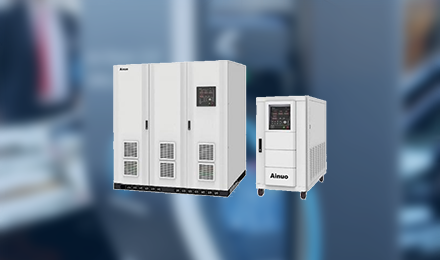
As electrical power systems become more complex, engineers need reliable tools to model, analyze, and validate grid behavior. The increasing adoption of renewable energy, battery storage, distributed generation, electric vehicles, and power-electronic systems has made accurate power-system simulation more important than ever.
An
AC power grid simulator provides a virtual environment where engineers can study electrical networks, evaluate different operating conditions, analyze faults, and test control strategies without immediately relying on physical infrastructure.
However, not every simulator offers the same capabilities. Choosing the right solution requires looking beyond basic circuit modeling and considering the specific requirements of your application.
Here are the key features to evaluate when selecting an AC power grid simulator.
1. Accurate AC Power-System Modeling
The foundation of any power grid simulator is its ability to accurately represent an AC electrical network.
A capable simulator should support common grid components such as:
- Generators
- Transformers
- Transmission lines
- Distribution feeders
- Loads
- Circuit breakers
- Capacitor banks
- Reactors
- Renewable energy sources
- Battery energy storage systems
- Inverters and power converters
The underlying mathematical models should accurately represent important electrical characteristics, including voltage magnitude, phase angle, active power, reactive power, impedance, and frequency.
Model accuracy is particularly important when simulation results will influence equipment selection, system design, or operational decisions.
2. Power-Flow Analysis
Power-flow analysis is one of the fundamental functions of power-system engineering.
A simulator should allow users to calculate how active and reactive power flows through the network under different operating conditions.
Key results may include:
- Bus voltage magnitude
- Bus voltage angle
- Active power flow
- Reactive power flow
- Line loading
- Transformer loading
- System losses
A strong power-flow module makes it easier to identify overloaded equipment, voltage violations, inefficient operating conditions, and potential network constraints.
It should also make it straightforward to modify generation and load values and observe how the network responds.
3. Dynamic and Transient Simulation
Steady-state analysis is useful, but modern grids also require engineers to understand what happens over time.
Dynamic and transient simulation capabilities allow users to study system responses following disturbances or changes in operating conditions.
For example, users may want to simulate:
- Generator trips
- Load switching
- Transmission faults
- Renewable generation changes
- Sudden voltage disturbances
- Frequency events
- System faults and fault clearing
Dynamic simulation can help engineers evaluate whether the system remains stable after a disturbance and how quickly important electrical variables return to acceptable operating ranges.
4. Fault and Short-Circuit Analysis
Fault analysis is essential for designing safe and reliable electrical systems.
An AC power grid simulator should provide tools for modeling different fault conditions, including:
- Three-phase faults
- Line-to-ground faults
- Line-to-line faults
- Double-line-to-ground faults
The simulator should be capable of calculating fault currents and relevant system responses at different points in the network.
These results can support protection-system design, breaker selection, relay coordination, equipment ratings, and overall system safety.
5. Renewable Energy Modeling
Renewable generation has introduced new modeling requirements for power-system simulation.
A modern simulator should support models for technologies such as:
- Solar photovoltaic systems
- Wind turbines
- Battery energy storage
- Inverter-based generation
- Distributed energy resources
It is also valuable if the simulator can represent variable generation profiles and different inverter-control behaviors.
This allows engineers to investigate how high renewable penetration can affect voltage regulation, power quality, system stability, and power flows.
6. Flexible Load Modeling
Loads are not always constant.
Modern electrical systems can include industrial equipment, commercial buildings, data centers, electric vehicle chargers, heat pumps, and other dynamic loads.
A flexible simulator should support different load models and allow users to adjust parameters according to the application.
Being able to represent constant-power, constant-current, constant-impedance, or more detailed dynamic load behavior can improve the accuracy of simulation studies.
7. Real-Time Simulation Capabilities
For applications involving protection, control, and physical equipment testing, real-time simulation can be an important feature.
Unlike offline simulation, real-time simulation executes the electrical model at a defined simulation time step so that external hardware can interact with the simulated grid.
This can enable:
- Controller testing
- Protection relay testing
- Power converter testing
- Hardware-in-the-loop experiments
- Real-time monitoring studies
- Operator training
For organizations developing or validating grid-connected equipment, real-time capabilities can significantly expand the usefulness of a simulator.
8. Hardware-in-the-Loop Testing
Hardware-in-the-loop (HIL) testing connects physical hardware to a simulated electrical system.
For example, an actual protection relay can receive simulated voltage and current signals while the rest of the power network exists inside the simulator.
This creates a controlled environment for testing equipment under realistic operating and fault conditions.
When evaluating an AC power grid simulator, check whether it supports the necessary interfaces for connecting external controllers, relays, converters, measurement devices, or other hardware.
9. User-Friendly Network Modeling
Power-system simulation can involve large networks with hundreds or thousands of components. A simulator should therefore make network creation and modification as efficient as possible.
Useful features include:
- Graphical network modeling
- Drag-and-drop components
- Parameter editing
- Reusable component models
- Automated model validation
- Easy network configuration
- Import and export functionality
A well-designed interface can reduce engineering time and make complex simulation projects easier to manage.
10. Data Visualization and Reporting
Simulation produces large quantities of data. Simply generating numerical results is not enough; engineers need to interpret those results quickly.
Look for visualization features such as:
- Voltage and current waveforms
- Power-flow diagrams
- Frequency plots
- Phasor displays
- Trend graphs
- Fault-response plots
- Real-time dashboards
The ability to export simulation data into commonly used formats can also be valuable for further analysis, reporting, and documentation.
11. Scalability
A simulator that works well for a small test circuit may not be suitable for a large power network.
Consider whether the platform can scale from relatively simple systems to larger models containing numerous buses, generators, lines, transformers, loads, and distributed energy resources.
Scalability becomes especially important for utilities, research institutions, universities, and engineering organizations that may use the simulator for multiple projects.
12. Customizable Models and Controls
Every power-system project has unique requirements.
Predefined models are useful, but advanced users may need to create or modify models to represent specific equipment or control strategies.
A flexible simulator may allow users to customize:
- Generator models
- Inverter controls
- Protection logic
- Load behavior
- Control algorithms
- Renewable-energy models
- Energy-storage systems
This flexibility is particularly important for research and product development, where standard models may not fully represent the system under investigation.
13. Support for Modern Grid Technologies
The power grid is changing rapidly. A simulator should be capable of adapting to emerging technologies rather than being limited to traditional generation and transmission models.
Depending on the application, useful capabilities may include modeling for:
- Smart grids
- Microgrids
- Distributed energy resources
- Electric vehicle charging
- Battery storage
- Virtual power plants
- Grid-forming inverters
- Grid-following inverters
- Demand response
Support for these technologies can help extend the useful life of the simulation platform as the electrical system evolves.
14. Ease of Integration
Modern engineering workflows often involve multiple software and hardware platforms.
An AC power grid simulator should ideally provide practical integration options, such as:
- APIs
- Standard data formats
- External control interfaces
- Automation capabilities
- Hardware communication interfaces
- Compatibility with engineering workflows
Good integration capabilities make it easier to incorporate simulation into existing design, testing, and research processes.
15. Performance and Simulation Speed
Simulation speed matters, especially when engineers need to run large numbers of scenarios.
For example, a planning team may want to evaluate hundreds of operating conditions, while a researcher may need to perform repeated simulations with different control parameters.
Performance should therefore be evaluated based on the intended use case.
For real-time applications, deterministic execution and appropriate simulation time steps are particularly important. For offline studies, fast batch execution can significantly reduce analysis time.
16. Documentation, Training, and Technical Support
Even a technically advanced simulator can be difficult to use without adequate documentation and support.
Before selecting a platform, consider the availability of:
- User manuals
- Technical documentation
- Tutorials
- Example models
- Training resources
- Application notes
- Software updates
- Technical support
Strong documentation can reduce the learning curve and help engineers get more value from the simulator.
How to Choose the Right AC Power Grid Simulator
The best simulator depends on what you need to accomplish.
For power-system planning, prioritize accurate power-flow analysis, network scalability, fault analysis, and strong reporting capabilities.
For renewable-energy integration, look for detailed inverter, solar, wind, and battery models.
For protection and control testing, real-time simulation and hardware-in-the-loop capabilities may be essential.
For research and development, flexibility, customizable models, automation, and integration capabilities can be more important than a simple graphical interface.
For education and training, usability, visualization, documentation, and readily available example models may be the highest priorities.
A Practical Evaluation Checklist
Before choosing a simulator, consider asking the following questions:
| Feature | Why It Matters |
| AC network modeling | Represents real electrical-system behavior |
| Power-flow analysis | Evaluates voltage and power distribution |
| Dynamic simulation | Studies system response over time |
| Fault analysis | Supports protection and safety studies |
| Renewable models | Enables modern grid analysis |
| Battery/storage models | Supports energy-storage applications |
| Real-time simulation | Enables real-time testing |
| HIL support | Connects simulation with physical hardware |
| Visualization | Makes results easier to interpret |
| Scalability | Supports larger and more complex networks |
| Custom models | Enables specialized engineering studies |
| Integration options | Fits into existing workflows |
| Documentation | Reduces training and implementation time |
| Technical support | Helps resolve engineering and software issues |
Conclusion
Selecting an AC power grid simulator is an important engineering decision. The right platform should do more than model voltage and current—it should provide the analytical capabilities needed to understand increasingly complex electrical networks.
Power-flow analysis, dynamic simulation, fault studies, renewable-energy modeling, real-time simulation, hardware-in-the-loop testing, scalability, customization, and data visualization are among the most important capabilities to evaluate.
As grids become more decentralized, renewable, digital, and power-electronics-driven, simulation will continue to play a central role in designing and validating the next generation of electrical infrastructure.
By matching simulator capabilities to your specific engineering objectives, you can build a simulation environment that supports more accurate analysis, safer testing, faster development, and better power-system decisions.



 TEL:+86 532 83995188
 PHONE:+86 177 5322 5039
 E-MAIL:ainuo@ainuo.com
 ADDRESS:No. 134 Zhuzhou Rd, Laoshan District, Qingdao, China