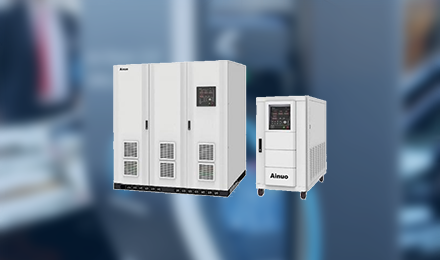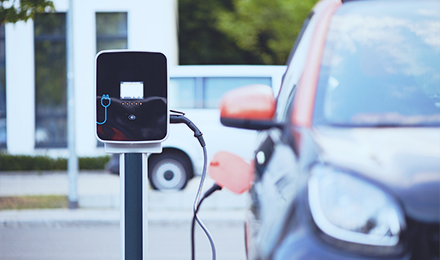
As electrification, renewable energy systems, and advanced electronics continue to evolve, the demand for flexible and efficient power testing solutions has never been greater. Traditional DC power supplies are designed primarily to source power, but modern testing environments increasingly require equipment capable of both sourcing and sinking energy. This is where dual-channel bidirectional DC power supplies stand out.
A dual-channel bidirectional DC power supply combines two independently controllable channels that can both deliver power to a device under test (DUT) and absorb power generated by the DUT. This capability enables engineers, researchers, and manufacturers to simulate real-world operating conditions, recover energy during testing, and improve overall testing efficiency.
From electric vehicle development to renewable energy storage validation, dual-channel bidirectional power supplies have become essential tools across numerous industries. In this article, we explore the top seven applications where these advanced power systems deliver significant value.
One of the most common applications for dual-channel bidirectional DC power supplies is electric vehicle (EV) battery testing.
Modern EV batteries must undergo extensive validation to ensure safety, performance, reliability, and compliance with industry standards. During testing, batteries are repeatedly charged and discharged under varying conditions. A bidirectional power supply can efficiently perform both operations without requiring separate charging and electronic load equipment.
The dual-channel architecture offers additional flexibility by allowing engineers to test multiple battery modules simultaneously or independently. For example, one channel can simulate charging conditions while the other evaluates a secondary battery pack or subsystem.
Key benefits include:
As EV adoption accelerates worldwide, battery manufacturers increasingly rely on bidirectional power technology to streamline validation and improve testing efficiency.
Grid-scale and commercial battery energy storage systems play a critical role in stabilizing renewable energy generation. Before deployment, these systems require rigorous testing to verify efficiency, lifespan, and operational safety.
A dual-channel bidirectional DC power supply allows engineers to simulate realistic charge-discharge scenarios encountered in energy storage applications. Because the power supply can absorb energy and return it to the grid rather than dissipating it as heat, testing becomes significantly more energy-efficient.
Typical testing activities include:
With independent channels, engineers can test multiple battery strings or compare different storage technologies under identical operating conditions.
Solar panels, wind turbines, fuel cells, and other renewable energy sources often require sophisticated testing environments before integration into larger power systems.
Dual-channel bidirectional DC power supplies can emulate renewable energy sources or storage devices with exceptional precision. Engineers use these systems to simulate changing environmental conditions and evaluate how power conversion equipment responds.
Common use cases include:
The bidirectional capability is especially valuable when testing systems that both consume and generate power depending on operating conditions. This allows researchers to recreate real-world scenarios without requiring actual renewable energy hardware.
Modern vehicles contain increasingly sophisticated power electronic systems, including:
These components frequently operate in bidirectional energy flow environments. For example, regenerative braking systems return energy to the battery, while traction systems consume battery power during acceleration.
A dual-channel bidirectional power supply enables engineers to emulate both sides of these energy exchanges. One channel may represent a battery pack while the second channel simulates a converter or another subsystem.
Advantages include:
As automotive architectures become more electrified, bidirectional testing capabilities are becoming indispensable for product development teams.
Aerospace and defense applications demand extremely high reliability and performance. Electrical systems used in aircraft, satellites, drones, and military equipment must function correctly under a wide range of conditions.
Dual-channel bidirectional DC power supplies enable engineers to replicate complex power scenarios while maintaining precise control over voltage, current, and power parameters.
Typical aerospace applications include:
The ability to independently configure each channel allows engineers to model multiple power buses or redundant power architectures commonly found in aerospace systems.
Furthermore, regenerative energy handling helps reduce operating costs during extended testing campaigns.
Research institutions and corporate R&D facilities frequently investigate new energy technologies, battery chemistries, power conversion methods, and advanced electronic systems.
Because research environments often require maximum flexibility, dual-channel bidirectional power supplies are highly valued. Engineers can rapidly reconfigure test setups without investing in separate source and load instruments.
Applications in research laboratories include:
Independent channel control allows researchers to conduct parallel experiments, compare technologies side by side, or create sophisticated test scenarios involving multiple power sources and loads.
The result is a more versatile laboratory environment capable of supporting innovation across numerous disciplines.
Production environments require fast, repeatable, and reliable testing procedures to ensure product quality before shipment.
Dual-channel bidirectional DC power supplies are increasingly integrated into automated manufacturing test systems because they can perform multiple testing functions within a single platform.
Manufacturers use these systems for:
The ability to source and sink power reduces equipment count, simplifies system integration, and lowers maintenance requirements.
Energy recovery capabilities also generate substantial cost savings in high-volume manufacturing environments. Rather than dissipating discharged energy as waste heat, bidirectional systems recycle much of it back into the facility's power infrastructure.
As production scales increase, these efficiency gains can translate into significant reductions in operating expenses.
While bidirectional capability alone offers substantial advantages, adding dual independent channels further expands testing possibilities.
Dual-channel systems provide:
Engineers can test multiple devices simultaneously or independently, increasing laboratory productivity and reducing overall testing time.
Many real-world applications involve multiple interconnected power sources and loads. Dual channels allow these interactions to be modeled accurately.
Instead of purchasing multiple power supplies and electronic loads, users can accomplish a wide range of testing tasks with a single instrument.
Regenerative operation returns absorbed energy to the grid or shared DC bus, significantly reducing power consumption and cooling requirements.
Channels can often be operated independently, connected in parallel for higher current, or configured in series for higher voltage applications.
Dual-channel bidirectional DC power supplies have become essential tools in today’s rapidly evolving energy and electronics landscape. Their ability to both source and absorb power, combined with the flexibility of independent dual channels, makes them uniquely suited for complex testing and simulation tasks.
From electric vehicle battery validation and renewable energy system development to aerospace testing and automated manufacturing, these advanced power systems help organizations improve efficiency, reduce costs, and accelerate innovation.
As industries continue to embrace electrification, energy storage, and intelligent power management technologies, the role of dual-channel bidirectional DC power supplies will only become more important. Organizations that invest in these versatile testing platforms gain the flexibility needed to address current challenges while preparing for the next generation of power system development.
*Please fill in the required information carefully, and we will contact you within 4-8 hours.

 TEL:+86 532 83995188
 PHONE:+86 177 5322 5039
 E-MAIL:ainuo@ainuo.com
 ADDRESS:No. 134 Zhuzhou Rd, Laoshan District, Qingdao, China


Copyright©2025. Aino Instrument Co., Ltd All Rights Reserved.
Powered by:WDL