Whether you're developing electric vehicles (EVs), portable electronics, renewable energy storage systems, or complex control systems, the battery simulator power supply is a critical tool on your test bench. Choosing the right one can significantly impact your efficiency, product quality, and time-to-market.
In this in-depth guide, we'll explore the key specifications and considerations you should evaluate when selecting a battery simulator power supply — and why they matter.
A battery simulator power supply mimics the electrical characteristics of batteries — including voltage, current, charge/discharge behavior, and dynamic responses — without requiring real batteries in your testing setup. Instead of relying on physical battery packs, engineers use a simulator to emulate battery performance under controlled conditions. This helps reduce variability, improve repeatability, and enhance safety during testing.
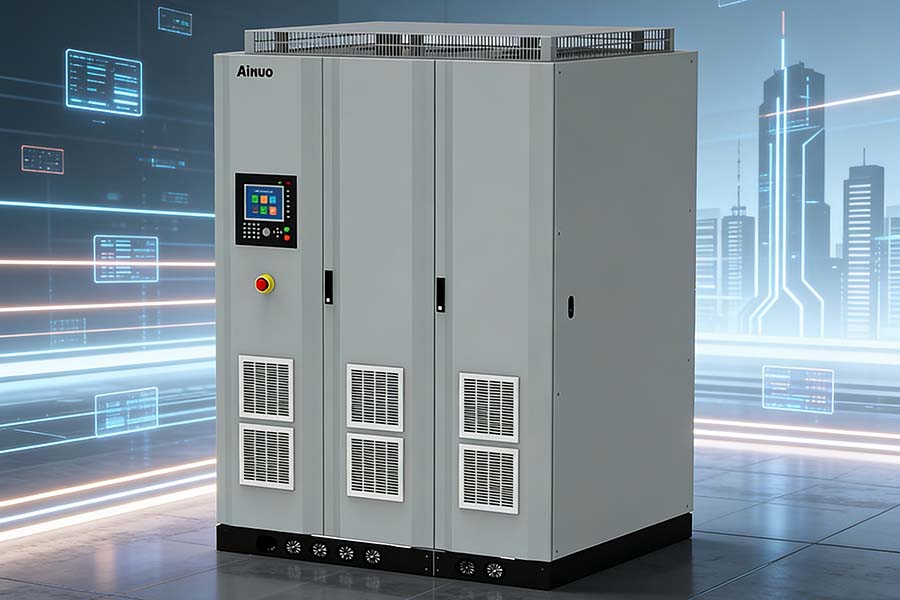
One of the first considerations is the maximum output voltage and current the simulator can deliver.
Voltage Range: Choose a simulator with a voltage range that covers both your current and future testing needs. If you design products across different battery types (e.g., single-cell Li-ion to multi-cell battery stacks), ensure the simulator can replicate those voltage levels.
Current Capacity: It must supply and sink (absorb) current at levels matching your application. For high-power EV testing, this could be hundreds of amps, while low-power IoT devices might require only milliamps.
Why it matters: Underestimating voltage/current requirements limits your test coverage and could force hardware redesigns or multiple simulators.
Battery simulator power supplies are rated in watts (W). As power equals voltage multiplied by current (P = V × I), your simulator's power rating determines the types of systems you can emulate.
High-Power Systems: For EV battery packs or grid storage, a simulator with a high power rating (kilowatts) is essential.
Scalability: Modular systems allow you to combine multiple simulator units for higher power tasks — a feature worthwhile if you expect future expansion.
Why it matters: Scaling beyond the simulator's capability can lead to thermal issues, instability, or inaccurate test results.
Real batteries aren't static — their voltage changes significantly with load, temperature, internal resistance, and other factors. A good battery simulator must respond rapidly and accurately to dynamic load changes.
Transition Speed: How quickly can the simulator adjust to step changes in current draw?
Bandwidth: The speed range over which the simulator can faithfully emulate transient responses.
Why it matters: For tests involving pulsed loads (e.g., motors, wireless transmitters), a simulator with poor dynamic performance will produce misleading results.
Modern battery simulators offer extensive programmability to shape voltage, current profiles, and more.
Software Control: A user-friendly software suite allows you to define test profiles, record data, and automate sequences.
Remote Interfaces: Ethernet, USB, GPIB, and CAN interfaces enable integration with automated test systems or lab networks.
Scripting & APIs: Support for scripting languages (Python, MATLAB, etc.) lets engineers customize test flows.
Why it matters: Programmability increases flexibility, reduces manual testing time, and improves repeatability in regression testing.
A simulator's ability to accurately measure voltage, current, and power directly affects the validity of your test data.
Voltage Accuracy: How close the simulator's output stays to the programmed voltage.
Current Accuracy: The precision in measuring current draw or sourcing current back.
Resolution: Higher resolution means finer detail in measurement data — essential for sensitive devices.
Why it matters: Inaccurate measurements can lead to invalid test results, misinterpretation of performance, and poor product decisions.
Advanced simulators go beyond basic power supply functions to emulate specific battery behaviors.
State of Charge (SoC) Modeling: Some simulators mimic how a battery's internal voltage changes with state of charge.
Equivalent Circuit Models: Represent batteries more realistically with dynamic resistance and capacitance components.
Temperature Effects: High-end simulators can emulate thermal behavior.
Why it matters: These features are critical when you're validating battery management systems (BMS), state-of-charge algorithms, or dynamic load responses.
Batteries can be hazardous — especially at high voltages and currents. Your simulator should include robust safety protections:
Overcurrent Protection
Overvoltage Protection
Overtemperature Shutdown
Short-Circuit Protection
Why it matters: Safety protections not only protect your equipment but also prevent damage to prototypes under test.
A simulator's efficiency determines how much power is wasted as heat:
Cooling: Look for systems with effective thermal management — this might include forced air or liquid cooling.
Efficiency Ratings: High efficiency reduces operating costs and extends system life.
Why it matters: Poor cooling can cause thermal throttling, unstable outputs, or even hardware failure.
Depending on your lab configuration, the physical size and mounting options (rack-mounted vs. bench unit) could influence your decision.
Portable vs. Fixed Systems: Smaller bench units are ideal for R&D labs, while rack systems suit production test floors.
Weight & Installation: Heavy units might require special racks or support.
Why it matters: A unit that doesn't fit your workspace or test rack adds complexity and cost.
Finally, consider the manufacturer’s support and service infrastructure:
Warranty Period: Longer warranties reflect confidence in reliability.
Calibration Services: Regular calibration ensures ongoing accuracy.
Technical Support: Access to responsive technical assistance improves uptime.
Why it matters: Reliable support minimizes downtime and ensures your simulator remains accurate and dependable.
Selecting the right battery simulator power supply isn't just about picking the highest rating or most expensive model. It's about evaluating your specific application needs, test requirements, and future growth plans. By carefully considering voltage and current capabilities, dynamic response, programmability, accuracy, safety, and support services, you'll be better equipped to choose a power supply that delivers reliable, repeatable, and real-world battery emulation.
With the right simulator in your toolkit, you'll accelerate development cycles, reduce dependency on physical battery packs, and improve overall test quality.
*Please fill in the required information carefully, and we will contact you within 4-8 hours.

 TEL:+86 532 83995188
 PHONE:+86 177 5322 5039
 E-MAIL:ainuo@ainuo.com
 ADDRESS:No. 134 Zhuzhou Rd, Laoshan District, Qingdao, China


Copyright©2025. Aino Instrument Co., Ltd All Rights Reserved.
Powered by:WDL